Showing posts with label ScaleUp. Show all posts

Sunday, 6 September 2015

#altc Open Learning? It's a Peach

This is the outline of my presentation for ALTC 2015 on Thursday 9 September


#altc 2015 Open Leaning? It's a Peach! from Jane Challinor


This presentation gives a brief overview of an innovative learning activity and assignment that I did with my class last year which involved the use – and creation -  of Open Educational resources.

"Peach" refers to the site Photopeach. This provides a simple, scaffolded approach to creating online content:
students upload images, organise them, add captions, choose from selected music or link to YouTube then share the finished product on Facebook; they can easily share a group log-in so that they can collaborate virtually.


A bit of background: I teach a first year Health and Social Care module known as Research and Professional Practice. The aim of my module is primarily to introduce students to academic study – including digital competence, referencing, and reflective practice & group work.

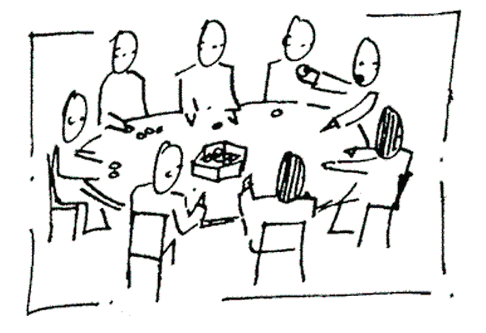
I have 120 students and we work in two groups of 60  in a new, technology-enhanced classroom know as SCALE UP. This holds up to 100 students in the classroom at any time; has round tables holding nine students, Macs (3 students per mac), Wifi, -  all set up for an enquiry based learning approach.

Before students arrived I conducted a pre-course “Digital skills” survey via Facebook to find out what they already knew, what skills they had and where they felt less confident: what emerged form this was that:

74% were not confident with online content creation
44% were not confident about referencing
52% were not confident about Harvard specifically

interestingly, 65% said they were confident about copyright (BUT on further enquiry, it turned out they actually thought it was OK to use music from You Tube, their own Itunes accounts or that any Google images were copyright free)

So, why use OERs and open technology? the most compelling argument for me is about collaboration: we certainly don’t have any thing on our VLE that allows students to collaborate online, not even to create content – unless you include a rather clunky e-portfolio plug in (and frankly I don’t!)  But OERs mean collaboration beyond the classroom and the cohort. Furthermore, OERs, social media, web 2.0 technology are all beginning to be used in the Health and Social Care field to create communities of practice amongst professionals – and  indeed are enabling service users to connect, to educate themselves and to take charge of their own well being. So for me it makes sense to use open platforms with these students from the outset.

And yes – Open platforms are more fun than essays! They allow students to express themselves in quite different ways and to be creative – which is particularly useful in reflective tasks.

The aim of my module is to introduce students to academic study – primarily: how to search for information, referencing and writing skills; group work, reflective practice.

So this first formative assignment aimed to combine these elements:
  • Providing an experience of working collaboratively by working in groups
  • Getting them to reflect on professional values – “the Health and Social Care professional I want to be”
  • Using a simple online site for content creation
  • Learning how to find relevant images, add captions, choose music
  • Learning how to reference the media used and/or find CC/copyright free
  • Showing them an alternative to Powerpoint!
Did it work?
The proof of the pudding for me was that, 6 months later, in the final task of the module, (a reflective digital story) 

  • 90% still managed to use (and correctly attribute) CC/copyright free images 
  • 68% chose to use an online site (i.e. not PowerPoint!) - including Prezi, Knovio, WeVideo, MovieMaker - suggesting an increase in confidence with online content creation.
In the final digital story, reflecting on their learning from the module, they also noted (amongst other things)
  • an improvement in digital skills (16%)
  • improved skill in referencing (40%)
  • improved understanding of values (18%) 
  • the value of working in groups (46%)

AND.....
students' feedback on the module was overwhelmingly positive (actually the highest module evaluation scores I have had in four years of teaching this subject). 

So how do I feel about that? Why, just peachy, of course!  


Sunday, 12 October 2014

Digital by design


The first two weeks of term have flown by already and the digital story telling project is underway. Using Photopeach to create a simple video with music and captions, the students are busy creating a digital essay on "professional values".

Last year I spent a lot of time explaining the importance of digital skills to my students and pointedly taking them step by step through a number of tools and processes. This year I am adopting a more immersive approach.

In the process of creating this digital essay, students are indirectly learning a number of other skills  - from searching for, downloading, saving and uploading images, to understanding Creative Commons licenses and avoiding copyright restrictions. They also learn how to: access and edit Google Docs to enrol themselves in project groups, share ideas on Discussion Boards, familiarise themselves with the Mac keyboard layout and touch pad gestures, create and save office documents and send them as attachments to emails, take a photo of their whiteboards and upload these to the Facebook group page etc.

We sometimes blithely assume that most students can easily tackle all of these processes, but I have spent a lot of time in the workshops sitting alongside some as they struggle with these tasks, often for the first time.

And let's not forget the really fundamental skill of learning to work together in groups - something that is fraught with anxiety for most students. Even if, as in the case of this project, groups are self selecting and based on early friendship alliances, there are still some students who find it hard to easily fit in a group and, once there, understand how they could or should contribute.

The positive thing for me about the Scale Up workshop is the space it gives me to move around the groups, checking on progress as needed - especially now that I have a two hour workshop with fewer students (well, there are still scheduled to be 60-70 in each workshop, so "smaller" is relative!)

For the first three weeks I also have the luxury of a co-tutor which really helps when students are asking for support on technical issues. 

Well.... so far, so good. I can't wait to see the outputs from this first assignment and to follow up with students on how they see their progress in developing their digital skills.


Tuesday, 1 July 2014

#uogapt Classroom design, technology and learning: pecha kucha

.

Shaping how we teach: The Connected and Open Classroom from Jane Challinor

Creating a pecha kucha took about 4 times as long as a conventional 30 minute presentation. I don't think I want to ever do it again. Plays in to my quest for perfectionism even more than creating a Prezi and I am dreading the actual delivery in breathless 20 second bursts. Or maybe it's just presenting full stop that I wish to avoid? I am though looking forward to visiting Greenwich and the conference itself.


Friday, 6 June 2014

Trust

https://www.flickr.com/photos/marilynjane/5877663279 
Some thinking I have been doing in advance of the APT conference in July "Connected Learning in an Open World".......


What makes a classroom connected and open and how do these factors change the behaviours of both teacher AND student?

For me openness has many facets. It's about being open to change, open to student centred strategies, open to students taking over the content and design, going beyond the closed environment of the traditional classroom to encompass the wider world and even encroaching on the students' and the teachers' private space and time.

Connected can mean a classroom that is connected to the internet, but also means students being connected to one another - working together to solve a problem, both in the classroom and beyond it. Connected too to the teacher in new ways - through social networks as well as email or face to face in classroom time and tutorials.

Once you start to change the teaching environment you change the way learning happens. Until very recently the traditional classroom had not changed its appearance in over a century and our traditional expectations of student behaviours match this environment - students who are attentive, facing forward, sitting in rows and following instructions. Teachers who are standing, speaking and directing. In the connected and open classroom, these boundaries, like the boundaries between classroom time and personal time, teaching space and social space, start to be eroded.

Clearly things are changing and the typical classroom is being disrupted technology. This is a visualisation submitted by a masters student at the University of the Balearic Islands in Ibiza on the impact of ITC in the classroom. This is a great video, exemplifying the notion of connectedness and openness on so many levels: the student uses You Tube to submit his assignment and he adopts a meme - the Harlem Shake - which itself symbolises both collaboration and disruption.


So yes, we think of BOYD, wifi,  technology in the classroom, the internet, flipped approaches etc, as being the disruptive elements that bring about connectedness and openness, but there's something else that makes a difference - and again we saw it in the video: seating arrangements.

In the US there has been developing a movement? known as Scale Up which is changing the shape of classrooms. There are some variations but essentially the space is dominated by large round tables seating 9 students in 3 groups of 3. Round tables are especially important because they enable the student to look at other students and not at the teacher, symbolising a less teacher dependent and more collaborative way of working.

This has an impact on how we structure teaching sessions: to make full use of this new type of space, it is necessary to rethink the curriculum and the pedagogy. As an example - when I first started to teach this module it was known as Study Skills. Students completed their main assignment by visiting the library and finding and photocopying three journal articles about a particular group of users of health or social care services, they wrote a short precis of the three articles and submitted an individual hard copy (this is just 4 years ago). Now the module is known as Research and Professional Practice: students work collaboratively in groups to research a particular group of users of services, but this time using electornic databases, websites and social media as their sources. They submit their final projects using an internet based platform such as Pinterest or Tumblr. The curriculum focus on digital citizenship and skills and instead of lectures and seminars, there are active workshops where over 100 students come together to learn, work and create.

I'd love to be able to tell you that this module is a big success and that all the students are over the moon about the new classroom . They are not. They sometimes find it hard to see the relevance of what they are doing to a career in health and social care. They find the classroom noisy and unfocussed. They find the tasks too demanding - or not demanding enough. Attendance has not improved. Grades have not improved. The workshops and the planning that goes in to them are exhausting for the teaching staff too. But we are doing something difficult here, running just one module in this way - sowing the seeds of change - in a first year that is delivered 80% traditionally - 1 lecture/1 seminar. I like what Dewey said about the familiar....
Familiarity breeds contempt, but it also breeds something like affection. We get used to the chains we wear, and we miss them when removed. ~ John Dewey, The Child and the Curriculum (1902)
First year students in particular like and expect the traditional lecture and seminar format - they feel this is where and how they actually learn something. Freeing them from their familiar chains is going to take time.

SCALE UP stands for Student Centred Active Learning Environment with Upside down Pedagogies - essentially the flipped classroom approach is used with students studying learning materials at home and coming to class to participate in activities which demonstrate the theory.

In Scale UP US style - which actually originally focussed on Undergraduate Physics - students are tested, ranked and then assigned to mixed ability groups for the activities and group assignments. Each student in the three-member group also has a secific role - which alternates each week. These are generally the recorder or note taker, the investigator/experimenter and the sceptic or questioner who challenges the group's assumptions.

My institution in the past 12 months have adopted the Scale Up methodoloy and I volunteered to be one of the "early adopters" for my first year module in Study Skills.

My own classroom looks superficially like the MIT set up, but with considerably less space, which does cause some problems of noise and restricted movement. I also don't test students and place them in mixed ability groups. However, my students are provided with Mac Books. This is also a feature of more recent iterations of Scale Up, the group of three students share one lap top so that the emphasis is on shared learning and collaboration.

This contrasts with the way I used to teach the "techie" bits of my module - that is, as distinct topics, in one off sessions in a computer lab, where each student had their own pc and where their focus was still predominantly on following what the teacher was doing.

So in the Scale Up classroom, round tables are helping to provide more connectedness. Another important aspect is the wifi - which in this classroom is generally reliable and fast. This allows the students to turn their faces even further away from the teacher, and makes the classroom walls even more permeable or open to the outside world.

In my module I see this having an impact on two levels: firstly by enhancing the independent learning of the students - i.e by encouraging them to find their own answers ("Google It!!"). Secondly by supporting them to develop "digital competencies" - using effective search strategies, evaluating what they find on line, bookmarking and storing information safely, presenting information in innovative ways, using social media appropriately and developing an online identity that is congruent with their future roles as health and social care professionals.

Having a connected and open classroom has changed the form of the assessment. Last year it was classroom tests and essays about the value of social media in education. This year its a presentation of their research using social media - both as the source of information and as a presentation platform (e.g a Pinterest board about homelessness; a Tumblr blog about fostering and adoption).

So now, a funny story that almost completely undermines everything I have been saying about classroom design. In April I went to the University of Murcia on an Erasmus exchange to witness for myself some really advanced work in the use of TEL. My hosts in the Faculty of Education have an international reputation in this field.

Due to some losses in translation, I was expecting an open and connected classroom not unlike my own. I had been asked to conduct an interactive workshop on using social media for research (Pinterest) for a group of teachers in training on a module which focuses on the use of ITC in the classroom. What I found was a traditional raked lecture theatre, students who brought in a variety of devices of their own and, on that particular day - no wifi. After an initial panic, the students simply downloaded the phone app and did the exercise that way, sharing information with one another until each group was able to get on line and start on their pinboards. The teachers didn't intervene or help in any way (to be honest I had forgotten 3G and phone apps in my panic and dismay at everything going wrong). This is part of the ethos in the team that runs this programme. They told me that they used to give quite a lot of instruction to students about platforms and tools they could use; now that support is minimal. The students complain and get distressed that they can't manage these new ways of working without teacher input, but gradually they go away and get on with it. And they are proud of their achievements.

At the end of the day this is not really about technology, it is about decreasing students' dependence on the teacher as the fount of all wisdom and coming to view themselves as thinkers, creators and teachers.

So, the moral of the story is that what really makes for a great pedagogy in the open and connected classroom is not the technology, not the tables, not the wifi, not even the flipped classroom. What is most important here is TRUST - of the teacher in the student and of the student in himself.

As I reflect on my experiences home and abroad over the last year, and look forward to the reshaping of the curriculum for the next one, it is this notion of trust that I am going to try and embed into my plans. Trust isn't the same as blind faith. I know things will go wrong, but I also know that there will be something to learn. So I guess I'm going to have to trust myself on that too.


Sunday, 6 April 2014

#digilit The experiment draws to a close


A year ago I was involved in two MOOCs - #oldsmooc and #octel - which helped me think about the redesign of my "traditional" study skills module to transform it into a more contemporary digital skills module. At the same time I volunteered to take part in a pilot of a Scale Up classroom environment. Just to add another variable to the mix, I also volunteered my module to be part of a Changing the Learning Landscape bid that the university was making to fund student mentors in classrooms

I have been blogging about this for the past year here on The Virtual Leader and also over on the module team blog Not To Scale

So now the great experiment is drawing to a close and the students have submitted their module evaluations.

There is much to learn from this. Designing a module to teach 21st century skills is one thing, designing it to be taught within a brand new teaching environment is another. The environment we teach in really does shape the how and the what of the curriculum. For this reason the changes made to the module were complex and complexity brings with it unintended consequences.

Some exciting and unlooked for outcomes for me are that a) more of the wider course team now want to teach in the Scale Up classroom b) there is general acceptance from the wider course team that digital literacy skills need to be embedded across the curriculum, so the module will likely disappear in 2015 and c) there is a lot of support within the team for greater use of student mentors in classrooms.

The last few weeks of the module have been particularly enjoyable as students have been working on their final group projects. My role has been much more that of a support for the groups and the classroom environment really lends itself well to this style of teaching. I feel the students and I are able to develop a relationship where I can see their progress and understanding and they understand the point of what we have been teaching them for the past 6 months!

I have now finished marking their final research projects and so it is possible to judge the extent to which digital literacy skills have been developed.

The first option they were given was to design a short research questionnaire using Survey Monkey or Google Forms. Option 2 was to use a platform such as pinterest or Tumblr to curate various resources relating to their particular research interests.

They also had to complete a worksheet in which they outlined the preparatory research they had carried out on their topic, reference their sources and discuss their design choices and any ethical issues.

I am generally very pleased with the majority of submissions which do demonstrate that they have managed to pick up the rudiments of Harvard referencing, can find their way around Google Drive and other web based tools and find articles, websites, ebooks and the like to support their work.

There is even the beginning of an understanding of research skills which, whilst many of the students don't see the point of them (according to their module feedback) we HE teachers will see as welcome news.

I will certainly be running at least one final iteration of this module. I have learned much about how to make bext use of the room, the technology and also what sort of assessment best aligns with the learning objectives for the module. Next year, project groups will be set up much earlier and there will be opportunities for formative feedback in Term 1, with the final project itself having more depth and breadth.

I will be sorry in one sense to see this module go altogether and will continue to be anxious about how well we can embed essential skills into the wider curriculum, but if that does begin to happen, the learning curve we have been through in the past few years will have been worthwhile.


Sunday, 9 March 2014

make a change.... #FutureEd


And so the MOOC about the History and future of Higher Education has come to an end. I have actually completed all the assignments, watched all the video lectures and read at least the core text - Now You See It - which was provided free of charge.

This has been a really stimulating course which, more than other MOOC I have dipped into, fully held my attention and taught me useful things that have impacted my thinking about my teaching practice.

Each week the topics of the videos - and the reading alongside - have caused me to stop and think about what I do and why I do it and further, have made me want to change what I do. Actually, to be more  specific the MOOC has given me the confidence to put into practice changes I have wanted to make but didn't feel I could. In particular - thinking about ways in which I could support students to build their own curriculum. This is what I think it means to make alliances with other change makers. If you are the only person who dreams of something different you may feel you don't have the strength to do it.

I have also been struck by the notion of proximity - and this has made me stop and look a little more closely at some of the great things that are going on in my own team - so I have come to see that we are most of us really trying to do something a little different, but perhaps not feeling fully confident to do it on a big scale just in case it doesn't work.

If you put these two ideas together - you get small communities of practice at the local level who have a dream to change things and can support one another to do just that.

Unfortunately there is always another side to the story. In sharing and in trying to do something different we leave ourselves exposed to criticism of the most unconstructive kind. I was really sad to note, in the closing forums of the MOOC,some really harsh comments about the leader, Cathy Davidson, as well as of Coursera and the very idea of a MOOC. Whilst I can understand and even sympathise with criticisms about the assessment process and the relevance of some of the activities, wanton "trolling" of someone who seems genuinely enthusiastic about sharing her expertise and experience for free seems rather churlish. Similarly, I know I come in for a lot of criticism for trying to do things differently in my teaching  - although less through open trolling (no conveniently shielding internet forum), more through the unsolicited offer of "feedback" that colleagues have "heard" from unhappy students and feel I ought to be "made aware of". The irony is that I would genuinely like feedback from colleagues interested enough to come and actually observe my classes - or even who want to talk to me about my objectives in doing what I do.

But despite these disappointments,  I have been inspired to share my practice more widely and to try to learn from those further afield. During this MOOC I have submitted two small presentation ideas for international conferences.

My aim is to go and meet people from different kinds of educational institutions in different countries both to talk about what I do and also to listen to them talk about what they do. One of the conferences was actually inviting presentations outlining a classroom project that maybe hadn't gone exactly as planned but which was providing some learning and new ideas for the future. How nice to be able to go and talk openly about "unlearning" - and learning from mistakes - rather than having to present the usual facade of expertise, knowing and perfect practice.

I will be making changes in my own classes as a result of this MOOC and as a result of just listening better to my students - and my colleagues. There is also a part of me now wanting to be part of making changes on a much wider scale, but of course as Lao Tzu said - a journey of a thousand miles begins right where you stand.


Monday, 3 March 2014

#FutureEd How we teach shapes what we teach


In last week's videos Cathy Davidson was discussing how teaching and learning is shaped by the technology we use. This seems very apt in the case of my classroom.

Typically, the seminar rooms we use in my institution are still set out in rows - facing front. Occasionally they are grouped together to facilitate group discussion but in rectangles which leave some students straining to join in a conversation. Scale Up is different in that it has provided us with round tables.

The very shape of the tables mean that students are facing each other and many have their backs to the tutor. This can be frustrating for tutors who still need/want to deliver content but is a real boon for student led learning.

A year ago, I "delivered" a session to first year students on designing a research question. I had a PowerPoint presentation and I spoke to them for about 40 minutes. Although I would have liked some interaction, a short exercise asking them to apply what I had just said to their own projects resulted in very little response.

A year on and I knew that the same style of delivery would be difficult in the Scale Up environment - not just because of seating arrangements, but because by now the students are used to getting on with group work and impatient of long presentations.

So this time I gave them a worksheet on which they were to write their tentative research question. The worksheet also contained a list of criteria by which the research question could be evaluated. The idea was to pass on their own question for another group to evaluate and then reflect on the feedback to help refine the final wording.

As they completed the exercise, I went round the groups challenging them and debating their questions and their feedback to one another. I could have done this exercise in this way a year ago but didn't. Working in this new environment has made me think differently about how I teach.

Is my teaching content different?
There is certainly less content as the focus of the sessions is on students researching on line and finding out for themselves. The other major innovation in the Scale Up classroom is the availability of wifi and laptops. So my teaching now is less about content and more about process, and as the year has progressed and the students have become familiar with the technology and the student directed format, there is in any case less teaching altogether.

Sessions  - like today's - can seem rather chaotic on the surface as students are all occupied on different tasks, producing their final projects. This is not so much perceived as chaos by the students - who are (facing away from the front and towards one another) conscious mainly of their own group's interactions - but by the teacher. I flit from group to group helping with technical queries about specific tools and websites or answering questions about the assessment process, witnessing the development of the groups' projects as I pass by.

So the shape of the room, the shape of the tables, shape the interaction between student and teacher and shape the how and the what of the teaching. I feel too that in this environment the students are also shaping how I teach. The room, the wifi, the tables, the access to the internet, give the students a power they didn't have (or couldn't access immediately or maybe legitimately) a year ago. Now I feel that somehow the power balance in the room is shifting as they start to determine the content, pace and process of their learning, relying on me for support the way they rely on Google. My teacher is an app?

So, is this scary? Fun?  A bit of both I guess. In one sense I feel I am losing control of the classroom and that what I am witnessing is just poor behaviour management on my part. On the other hand, I am back to my Rogerian Freedom-to-Learn roots as "one who creates the environment for engagement"

Now that is exciting!